
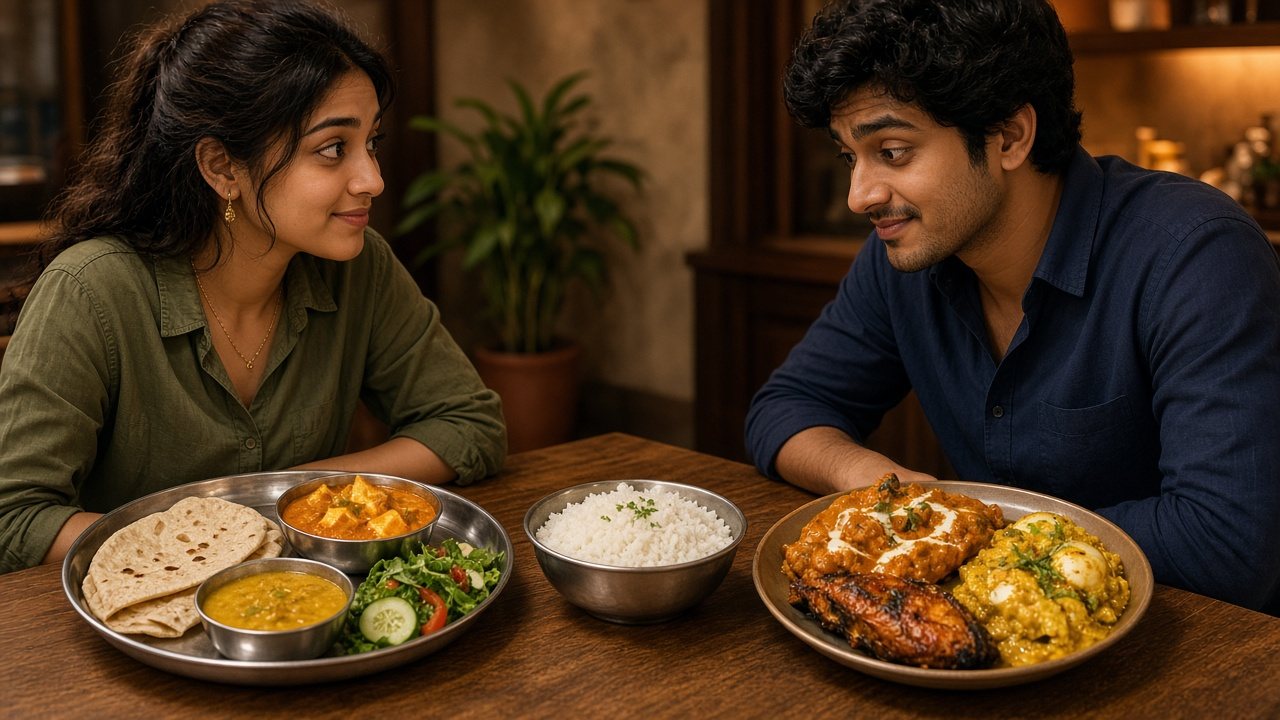
First rishta meeting. Samosas arrive.
He takes two. She takes none. Her mother quietly asks, “Beta, do they eat eggs at home?”
Nobody has asked about his job yet. The egg question came first.
Welcome to food habits in marriage, the topic everyone calls small and then argues about for 20 years. This post shows which food differences are harmless and which ones turn into daily fights. Plus exactly what to ask before you say yes. It matters even more if you’re marrying someone from another state, where the menu can change completely.
Why Food Habits in Marriage Feel Small (Until They Don’t)
Food looks like a lifestyle detail. A preference. Like liking mountains over beaches.
But you eat together two or three times a day. Every day. For decades.
That’s a lot of chances for a tiny difference to become a big mood.
Most couples skip this topic early because it feels silly. People happily plan what to talk about in your first arranged-marriage meeting. Then they never ask, “So, what’s on your plate on a normal Tuesday?”
Pro tip: Food is rarely about food. It’s about habits, family rules, faith, health and who does the cooking.
Get those right and biryani versus khichdi becomes a cute debate. Get them wrong and it becomes a cold war with a pressure cooker.
The Food Differences That Actually Show Up After Marriage
Here’s what tends to come up once you share a kitchen. Some are small. Some are not.
1. Veg, non-veg, or “eggetarian”
The big one. One partner is vegetarian, the other loves chicken. Or eats eggs but not meat. Or eats non-veg outside but never at home.
Plenty of couples make this work happily. The question isn’t the diet. It’s the rules around it.
2. Fasting days and religious food rules
Tuesdays without non-veg. Navratri menus. No onion and garlic on certain days. Roza during Ramzan. Saawan rules.
For many families, these come from faith and tradition. That deserves respect, not eye-rolls. You just need to know about them before the wedding, not on the first Tuesday after it.
3. Spice levels
She thinks “medium spicy” means a mild tingle. He thinks it means tears and a glass of milk.
Verdict: small. Two bowls of chutney fix this forever.
4. Ghar ka khana vs ordering in
One of you wants fresh dal-chawal every night. The other thinks Swiggy is a lifestyle.
Sounds minor. It’s actually a money, time and cooking-duty question in disguise.
5. Health diets and fitness plans
Keto. Intermittent fasting. Gym bro with six eggs at 7 am. Sugar-free everything because of a family history of diabetes.
These are personal choices. Just don’t expect your partner to give up mithai because you started a new diet last month.
6. Meal timings
Dinner at 7:30 pm versus dinner at 10:45 pm. Breakfast versus “I just have chai”.
Small? Yes. Annoying when you’re hungry and waiting? Very.
Even the honeymoon gets a test. Pick any of these honeymoon places in India and watch. One of you hunts for local seafood. The other hunts for a pure-veg restaurant.
Small Issue or Future Problem? The Honest Test
Here’s the simple rule.
A food difference is small when both of you can live with the other’s plate. It becomes a future problem when one person needs the other to change.
| Usually a small issue | Could become a future problem |
|---|---|
| Different spice levels | “You’ll stop eating non-veg after marriage, right?” |
| He loves chole, she loves dosa | Strict kitchen rules nobody mentioned |
| Different breakfast habits | Faith-based food rules one partner refuses to respect |
| One cooks, one does dishes | One partner expected to cook everything, alone |
| Eating out vs home food | Constant comments on what the other eats |
Notice the pattern. The left side is about taste. The right side is about control and expectations.
It’s a lot like deciding whether to marry outside your caste. The difference itself is rarely the problem. How both families react to it usually is.
🚩 Red flag: “Don’t worry, she’ll adjust.” If someone is promising your diet change on your behalf, pause.
The Real Fight Is Usually About the Kitchen, Not the Plate
Meet Neha. 28. Vegetarian. Marrying Karan, who happily eats chicken.
Neha and Karan are fine. Karan orders his butter chicken. Neha orders her paneer. Everyone’s happy.
Then come the questions. Can chicken be cooked at home? In which utensils? In whose kitchen? Can it sit in the same fridge?
Suddenly it’s not about two people. It’s about two households.
This matters most if you might marry a partner who wants to live with their parents. In a shared home, the kitchen often belongs to the elders, and so do the rules.
Ask early:
- Is non-veg cooked at home, or only eaten outside?
- Are there separate utensils, or separate shelves?
- Are there fasting days the whole house follows?
- Who decides the daily menu?
- Who actually cooks? Everyone, or one person?
That last one is sneaky. “Food habits” is often code for “who will be in the kitchen.”
It ties straight back to the joint family vs nuclear family question, because the answer changes with the setup.
Cooking should be shared. Not assigned by gender at the engagement ceremony.
How to Talk About Food Habits Before Marriage
You don’t need a formal interview. A chai-and-samosa chat works fine.
Food is one of the easier uncomfortable questions every couple should discuss, because you can keep it light.
What to say instead of “Are you veg?”:
- “What does a normal weekday meal look like at your home?”
- “Are there food rules at home I should know about? Fasting days, no non-veg days, anything?”
- “Would you be okay if I cooked or ordered something you don’t eat?”
- “Who usually cooks at your place? How do you imagine it after marriage?”
- “Any food you’d never want in the house?”
Then listen. Really listen. “I’m flexible” and “I’m flexible, but my mother isn’t” are very different answers.
If you hit a hard no and the families clash, read what to do when your family says no before anyone sends angry voice notes.
✅ Green flag: “I don’t eat it, but you can. Let’s figure out how at home.” That’s a keeper sentence.
5 Simple Deals That Make Different Food Habits Work
Couples who handle food habits in marriage well usually agree on a few simple deals. Steal these.
- No conversion projects. Nobody signs up to change the other’s diet. Respect goes both ways.
- Clear home rules. Decide together what gets cooked at home, in which pans, and where it’s stored.
- Restaurant freedom. Outside, each orders what they like. Share the rice, not the guilt.
- Fair cooking split. Cook, chop, clean, order. Rotate it. A cook from the market works too.
- Festival respect. Learn each other’s fasting days and food rituals. Join in when you can.
And yes, plan the wedding menu with both sides in mind. Add a clear veg and non-veg layout to your Indian wedding planning checklist. No chacha should have to ask the caterer which counter is “safe.”
One-line truth: Different plates are fine. Different respect levels are not.
Keep Reading
- Parents Like the Match, but You Don’t — What Should You Do?
- Does Caste Still Matter to Indian Millennials and Gen Z?
- 5 Questions to Ask About Money Before Marriage
Quick Takeaway
- Taste differences like spice, cuisine and timings are small. Laugh and move on.
- Expecting your partner to change their diet is a future problem.
- Ask about kitchen rules, fasting days and who cooks, not just “veg or non-veg?”
- In a joint home, the elders’ kitchen rules matter as much as your partner’s plate.
- Agree on simple home rules before the wedding. Respect both plates.
FAQs
Can different food habits cause problems in marriage?
They can, but usually not because of taste. Problems start when one partner expects the other to change their diet, or when kitchen rules and cooking duties were never discussed. Talk about these before marriage and most couples adjust easily.
Can a vegetarian and a non-vegetarian have a happy marriage?
Yes, many couples do. What helps is mutual respect and clear home rules, like whether non-veg is cooked at home and in which utensils. Nobody should be pushed to change what they eat.
How do I ask my match about food habits without sounding rude?
Keep it light and curious. Ask what a normal weekday meal looks like at their home, and whether there are fasting days or food rules you should know about. Share your own habits too.
Should I change my diet after marriage for my partner or in-laws?
Only if you genuinely want to. Respecting their rules at home, like fasting days or a veg kitchen, is kind. Being forced to give up your own food choices is not, so agree on the limits before the wedding.
Who should cook if we have different food habits?
Share it. Many couples split cooking, chopping, cleaning and ordering in, or hire a cook. Cooking duty should be agreed between both partners, not assumed for one person.
Love can survive paneer on one side and fish curry on the other. It just can’t survive constant judging.
So ask the food questions early, laugh at the spice fights, and share the rice.
Know a couple still arguing over the fridge shelf? Send them this. And tell us in the comments: is food a deal-breaker for you, or just a fun difference?
Joint Family vs Nuclear Family: Discuss THIS Before Marriage
November 5, 2026 at 9:20 am[…] Ask the boring questions. Who cooks today? Is there a cook or maid? Will the new spouse be expected to take over anything? Does the son of the house actually know where the pressure cooker lives? And if your plates look different, check how different food habits play out after marriage. […]
Add a comment