
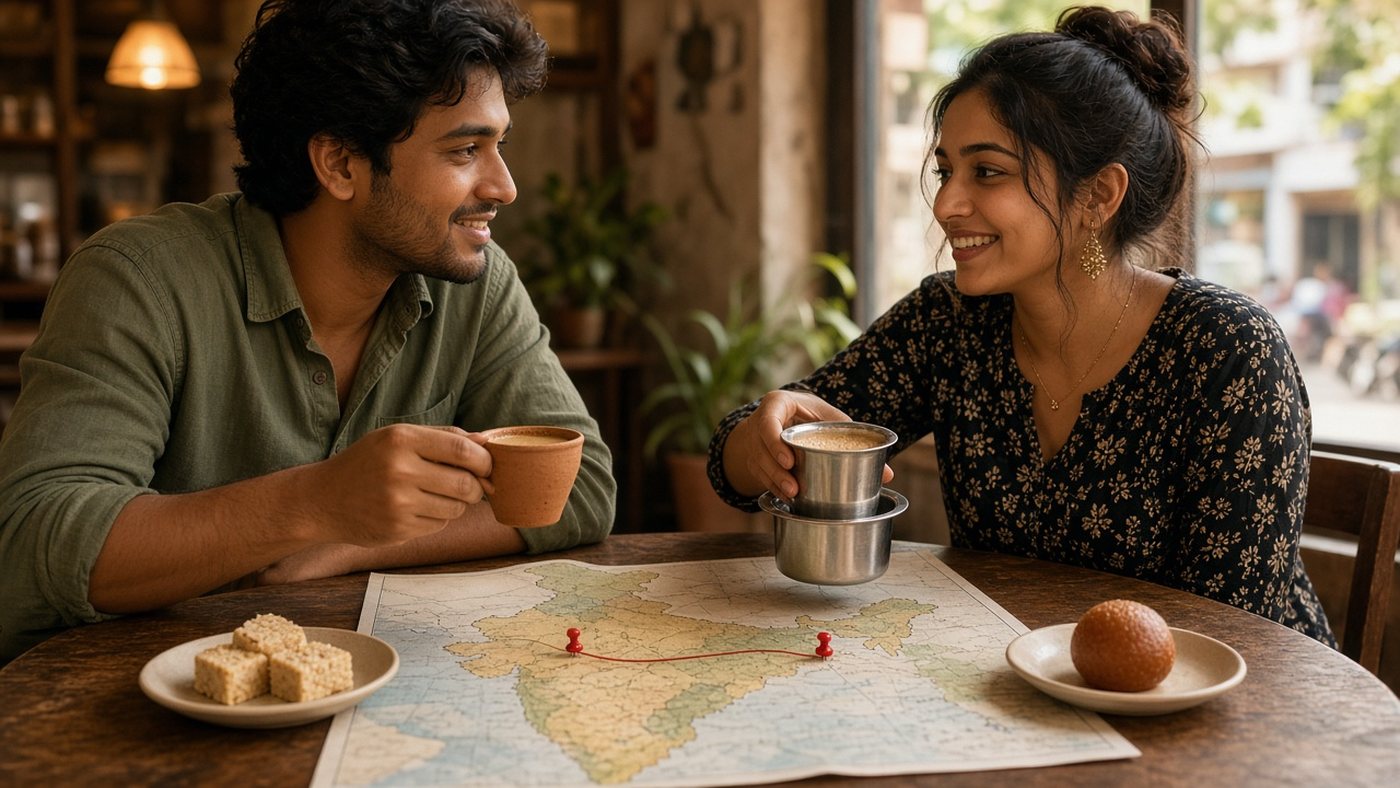
Meet Ananya. 28. Born in Lucknow. Thinks rice is a side dish.
Meet Karthik. 30. Born in Chennai. Thinks rice is the whole point of being alive.
They matched on an app, talked for three weeks, and laughed at the same memes. Then Ananya’s mom asked the big question: “Beta, Chennai? Wahan toh sab kuch alag hai.” As if Lucknow and Chennai are on different planets.
So, would you marry someone from another state? It’s a close cousin of the question would you marry outside your caste if compatibility was perfect, but with more food, more languages and longer train rides. This guide covers the real differences, the fun parts, the city question, and how to talk about it at home.
Why Marrying Someone From Another State Feels Like a Big Deal
India is basically 28 countries sharing one cricket team.
Different languages. Different festivals. Different ideas of what “spicy” means. So when you marry someone from another state, families worry about two things: “Will they fit in?” and “Will we ever understand what the in-laws are saying?”
For many young couples, it’s a much smaller deal than it was for their parents. We studied with people from everywhere. We worked in cities where nobody asks where you’re “originally from” until the third chai.
Still, the question sits close to the debate on whether caste still matters to our generation. Region, language and community often travel together in a rishta conversation.
Pro tip: The state on someone’s Aadhaar card tells you where they were born. It tells you nothing about how they fight, save or apologise.
The Real Differences (Spoiler: It’s Not Just Food)
Okay, it’s a little bit about food. Let’s be honest. Here’s how to tell if different food habits are a small issue or a future problem.
But most inter-state couples say the bigger gaps show up somewhere else. Here’s a quick map of what usually differs and how much it actually matters.
| Difference | How big it feels | How big it really is |
|---|---|---|
| Food habits | Huge | Small, unless one of you is strict veg and the other lives on chicken |
| Language | Scary | Medium. Matters most with elders, not with each other |
| Festivals and rituals | Medium | Small. Double festivals means double sweets |
| Family setup and roles | Small | Big. This is where real friction lives |
| Where you’ll live | Small | Very big. Someone may move far from home |
Notice the pattern? The things families argue about first are rarely the things couples struggle with later.
The quiet ones matter more. Like who does what at home, how often in-laws visit, and if you’ll pick a joint family or nuclear family setup. Those depend on the family, not the state.
The Fun Side Nobody Talks About
Inter-state marriage gets a lot of worried uncles. It deserves a few fans too.
- Two festival calendars. Pongal and Lohri. Onam and Diwali. Your leave balance will cry. Your plate won’t.
- Two cuisines at home. Sunday dosa, Monday rajma. Nobody gets bored.
- Bilingual kids. They’ll be able to scold you in two languages. Great value.
- A wedding with double the music. Think dhol meets nadaswaram. If you want ideas, look up traditional wedding songs and dances from different regions and steal from both sides.
Also, you get a free tour guide for a whole new part of India. For life.
Language: Do You Need to Learn Theirs?
Short answer: you don’t need to be fluent. You do need to try.
You two will probably talk in English or Hindi. The gap shows up at family lunches, when everyone laughs at a joke and you laugh three seconds late.
Learning even 20 words changes everything. “Thank you.” “Very tasty.” “One more, please.” Elders melt when you try, even if your accent makes them giggle.
What to say instead of “I’ll never learn Tamil”: “Teach me the five words your nani uses most. I want to be on her good side.”
And to the partner whose language it is: translate, don’t tease. Okay, tease a little. But translate first.
Which City Will You Live In?
This is the real deal-breaker hiding behind the state question.
If you both work in Bengaluru, easy. If one of you lives in Kolkata and the other in Ahmedabad, someone is moving. Usually, families assume it’s the woman. Don’t assume. Discuss.
Talk about three things early:
- Jobs. Can both careers grow in the chosen city? Women especially should mention career expectations before marriage, not after the packers arrive.
- Parents. Is anyone expected to move back home one day? This is close to marrying someone who wants to live with their parents, just with a flight in between.
- Visits. How many trips a year to each side? Festivals at whose home? Settle this before the first Diwali, not during it.
Distance from family is the part people underestimate. Being 2,000 km from your mom’s cooking is a real kind of homesick.
5 Questions to Ask Before You Say Yes
Love beats geography. But a few honest questions beat surprises. Add these to your list of uncomfortable questions every couple should discuss.
- “What does a normal week of food look like at your home?” Veg, non-veg, onion-garlic rules, fasting days. Ask now, not at the first family dinner.
- “Which festivals are non-negotiable for your family?” You’ll learn about traditions and how flexible everyone is.
- “Where do you see us living in five years?” The answer tells you if someone secretly plans to go back home.
- “How involved is your family in day-to-day decisions?” Some families call daily. Some call on birthdays. Both are fine, if you know.
- “How would you feel if our kids spoke my language more than yours?” Sounds far away. It’s a great test of ego.
If you both answer calmly and honestly, the state line is just a line on a map.
How to Bring It Up at Home
Your parents may not be against the person. They may be against the unknown.
Their worries are usually practical. “Will she adjust?” “Can we talk to his parents?” “Will you ever visit us?” Answer those, and half the resistance melts.
- Start with the person, not the state. Talk about values, kindness and their job before you say “Kerala”.
- Arrange a video call between the moms. Two moms discussing pickles can solve what ten arguments can’t.
- Show a plan. Where you’ll live, how often you’ll visit, how festivals will work.
- Give them time. You’ve had weeks to get used to this. They’ve had one dinner.
If things still get stuck, read our guide on what to do when your family says no. And if they say yes, congrats. Now you have two sets of rituals to fit into one wedding planning checklist. Good luck with the guest list.
✅ Green flag: Your match is curious about your family’s traditions and asks questions instead of making jokes about “your people”.
Keep Reading
- Parents Like the Match, but You Don’t — What Should You Do?
- What Should You Talk About During Your First Arranged-Marriage Meeting?
- Should Wedding Expenses Be Split Between Both Families?
Quick Takeaway
- Marrying someone from another state is common now, and mostly a fun kind of different.
- Food and language feel big. Family setup and where you’ll live matter more.
- Learn a few words of their language. Elders notice.
- Settle jobs, city and festival visits before the wedding, not after.
- At home, answer your parents’ practical worries, not just the state name.
FAQs
Is it a good idea to marry someone from another state?
It can be a great idea if your values, goals and family expectations match. Food, language and festivals are usually easy to adjust. Where you’ll live and family roles need more discussion.
How do I convince my parents to accept a partner from another state?
Lead with the person’s values and character, not their state. Answer practical worries about language, visits and living plans, and set up a call between both families early.
Do I need to learn my partner’s language after marriage?
You don’t need to be fluent, but learning basic words and phrases helps a lot, especially with elders. It shows respect and makes family gatherings far less awkward.
What are common problems in inter-state marriages?
The usual friction points are which city to live in, how often to visit each family, food habits like veg versus non-veg, and different ideas about family roles. Talking early prevents most of them.
How do inter-state couples plan their wedding?
Many couples mix rituals from both sides, hold events in both cities, or pick one venue and include key customs from each family. Agree on budget and who pays before booking anything.
Your kids might eat idli with chole one day. Honestly? Sounds delicious.
Send this to the friend whose match lives 1,500 km away and whose mom has already Googled “Bengali wedding rituals”. And tell us in the comments: would you marry someone from another state?
Food Habits in Marriage: Small Issue or Future Problem?
November 5, 2026 at 9:17 am[…] daily fights. Plus exactly what to ask before you say yes. It matters even more if you’re marrying someone from another state, where the menu can change […]
Add a comment